Barney Frank Quote “People are entitled to the presumption of innocence.”
United States, from 1895. The phrase "presumption of innocence" is not in the Constitution. However, the Fifth Amendment has the due process clause. The Fourteenth Amendment extends the Bill of Rights to the states. Due process generally means the government cannot deprive you of your freedom or property unless they follow the proper.
Kingman Brewster, Jr. Quote “The presumption of innocence is not just a legal concept. In

The presumption of innocence has several applications in today's world of criminal procedure. This presumption means that prosecutors must be discerning in deciding whether or not to pursue criminal charges against a suspect, since they will have the burden of proving guilt using only admissible evidence. Therefore, this presumption is a.
The presumption of innocence The right to be presumed innocent

Article 11: Presumption of Innocence and International Crimes. At first glance, Article 11 says that every human being is innocent until proven guilty, a fundamental element of fair trials and the rule of law, and a concept everyone can understand. But dig a little deeper into this Article, and we uncover a fascinating story about the.
John Grisham Quote “The presumption of innocence is now the presumption of guilt. The burden of
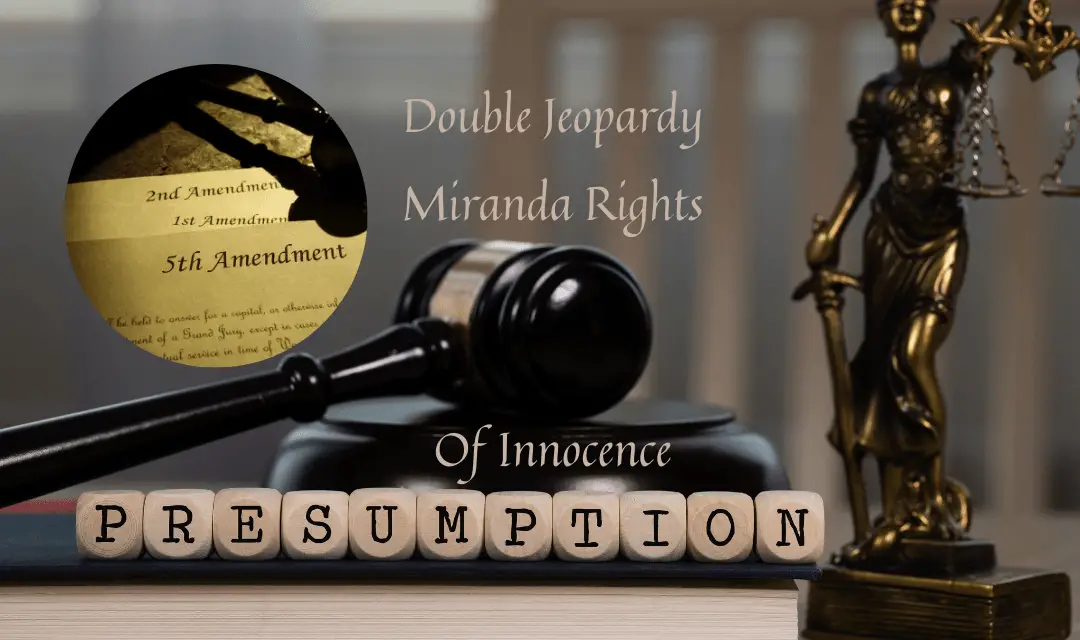
The presumption of innocence is a legal principle that every person accused of any crime is considered innocent until proven guilty.Under the presumption of innocence, the legal burden of proof is thus on the prosecution, which must present compelling evidence to the trier of fact (a judge or a jury).If the prosecution does not prove the charges true, then the person is acquitted of the charges.
Presumption of Innocence What You Should Know RALB Law
The First Notable Use of Presumed Innocence in U.S. Law. If we want to understand the term innocent until proven guilty better and where it comes from, it helps to look at key historical cases. One case commonly cited as the starting point for presumed innocence over presumed guilt is Coffin v. United States from 1894. United States Supreme Court.
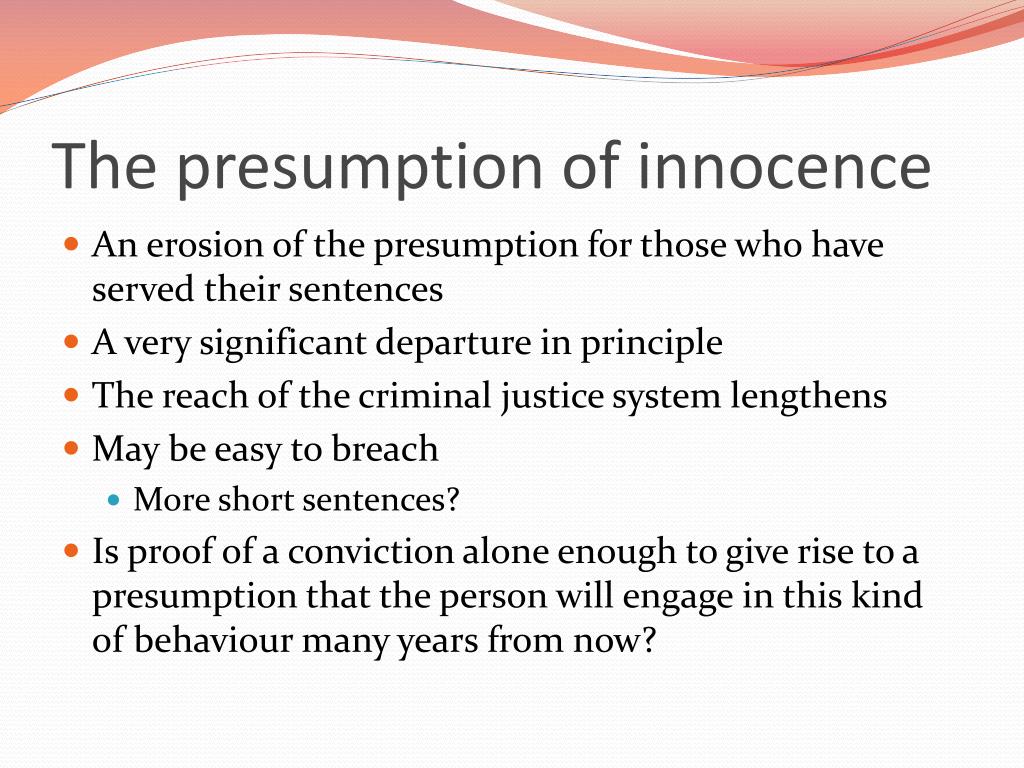
PPT The innocence rights of sentenced offenders PowerPoint Presentation ID689764
1. Introduction. During the last decade the presumption of innocence has been at the centre of a lively scholarly debate in England. The Human Rights Act 1998 transposed into English law art. 6(2) of the European Convention on Human Rights (ECHR), stating that '[e]veryone charged with a criminal offence shall be presumed innocent until proved guilty according to law'.
Presumption of Innocence Landmark Events
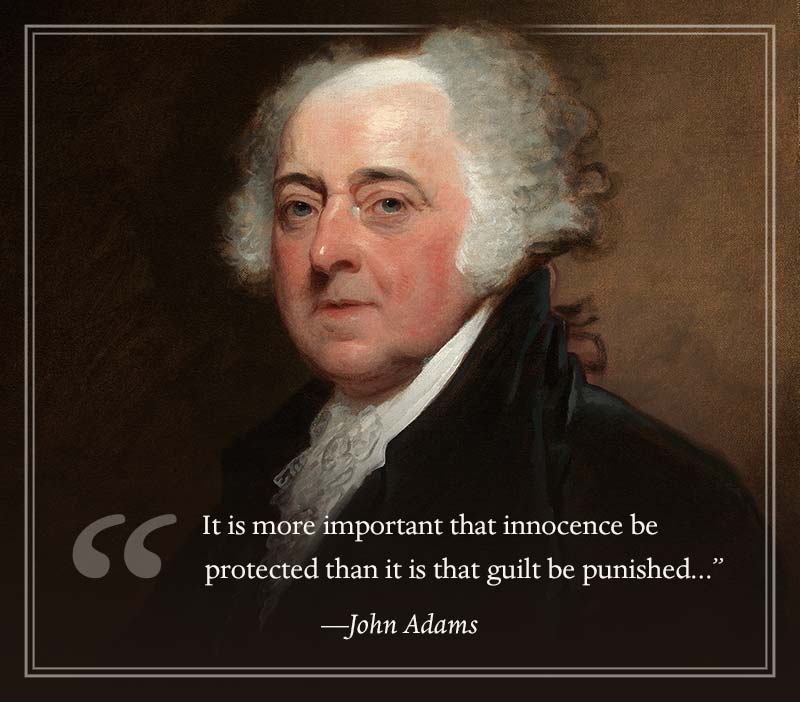
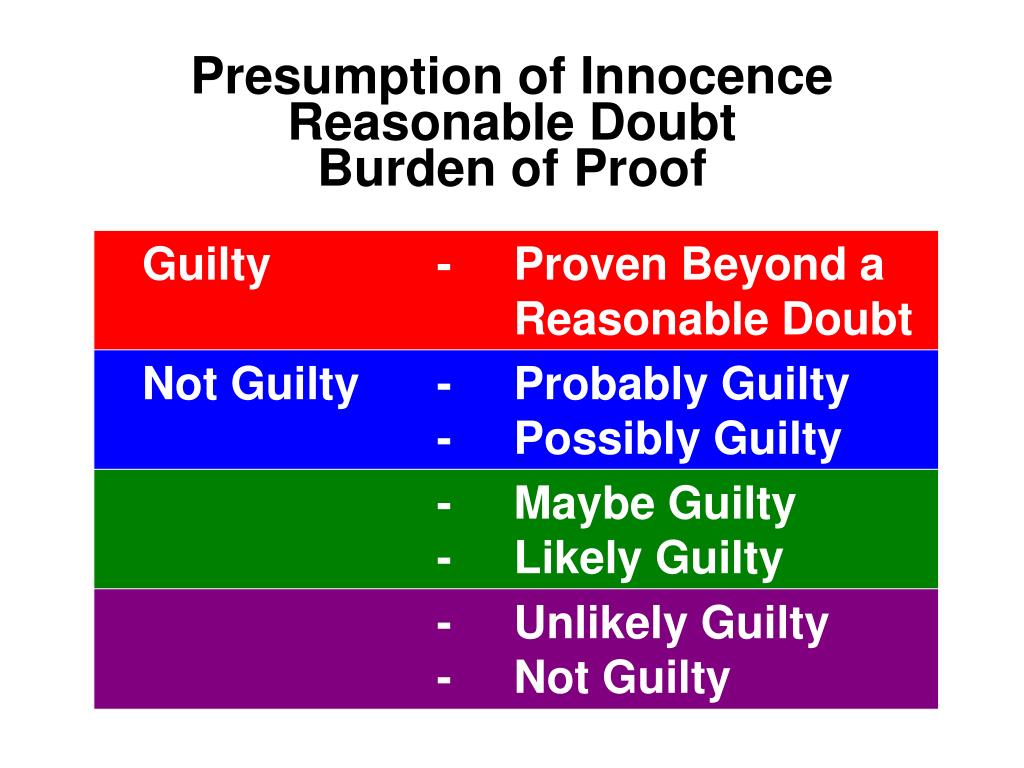
Absent a guilty plea, 1. the Due Process Clause requires proof beyond a reasonable doubt before a person may be convicted of a crime. The reasonable doubt standard is closely related to the rule that a defendant is presumed innocent unless proven guilty. 2. These rules help to ensure a defendant a fair trial 3.
PPT Presumption of Innocence Reasonable Doubt Burden of Proof PowerPoint Presentation ID4035820
The Presumption of Innocence. A fundamental principle behind the right to a fair trial is that every person should be presumed innocent unless and until proven guilty. Many people who are accused of crimes will ultimately be found innocent. This is why any restriction on an accused person's rights, such as holding them in pre-trial detention.
Seminar 4 The Presumption of Innocence
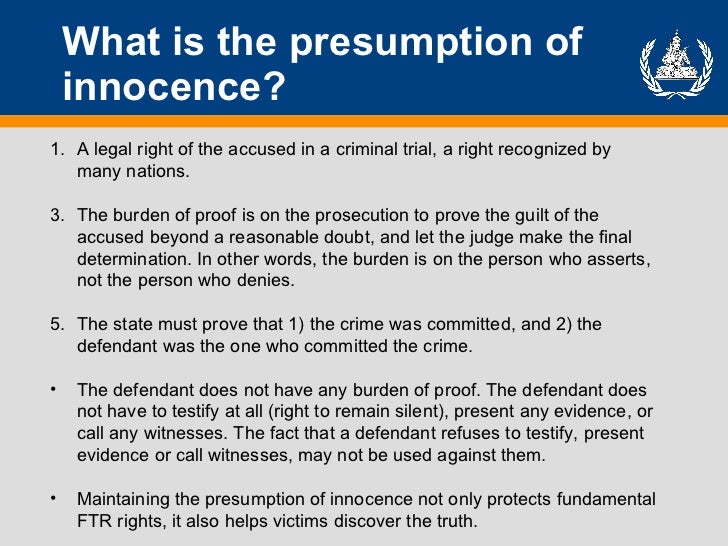
The presumption of innocence is a fundamental principle of the common law. The UN Human Rights Committee has stated that the presumption of innocence imposes on the prosecution the burden of proving the charge and guarantees that no guilt can be presumed until the charge has been proved beyond reasonable doubt.
Burden of proving exception and presumption of innocence under Evidence Law Law Times Journal
First, section 11 (d) guarantees the right of any person charged with an offence to be presumed innocent until proven guilty beyond a reasonable doubt. Second, section 11 (d) guarantees that the process whereby the guilt of any accused will be proved, will be fair. An essential component of a fair process is that the trier of fact — whether.
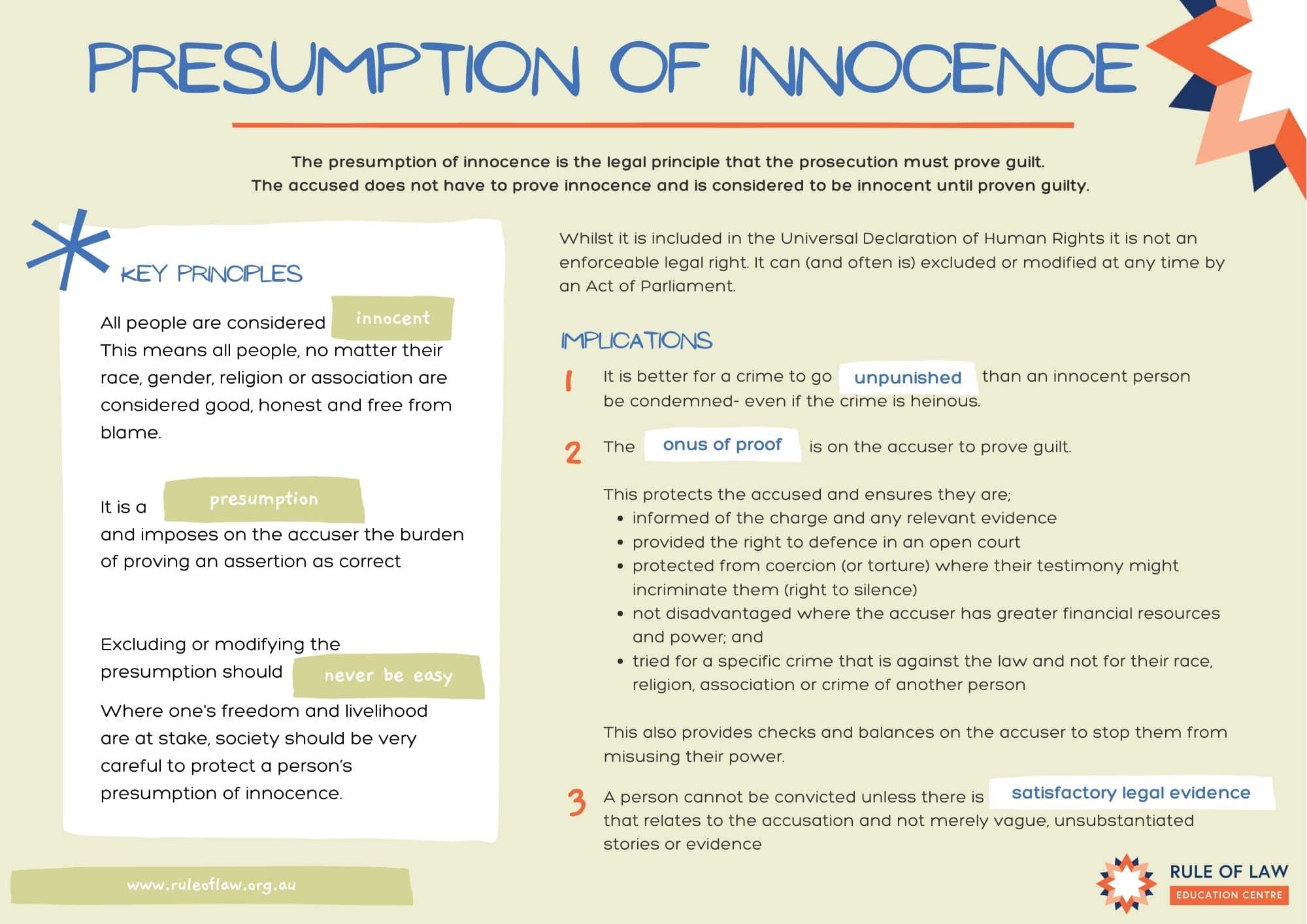
Principles Rule of Law Education Centre
The first part outlines and responds to the false assumptions made by many Sceptics. The first of these equates a presumption of innocence with a belief in innocence (hereafter, the Belief Thesis). This equivalence gives rise to two seemingly fatal problems (addressed under 'The Belief Thesis'): it is thought that a presumption—conceived as a belief—in a defendant's innocence would.
Barney Frank Quote “People are entitled to the presumption of innocence.”

presumption of innocence. A presumption of innocence means that any defendant in a criminal trial is assumed to be innocent until they have been proven guilty. As such, a prosecutor is required to prove beyond a reasonable doubt that the person committed the crime if that person is to be convicted. To do so, proof must be shown for every single.
Barney Frank Quote “People are entitled to the presumption of innocence.”

practical implementation varies - and underline that the presumption of innocence can be undermined in myriad ways. In theory, the presumption indeed applies to all, no matter who they are or where they are from. Yet personal biases can influence even well-meaning criminal justice officials, judges and jurors. Training can promote awareness
Presumption of Innocence DPC PERADI TASIKMALAYA
The presumption of innocence has roots dating back to the Magna Charta ( Tribe, 1970).It is a concept that pervades criminal justice systems throughout the world, and can be found in countries with radically disparate legal regimes such as France, Argentina and the former Soviet Union ( Sundby, 1989).However, it is within the common law tradition—and the USA in particular—that the.
Presumption of innocence and related rights Professional perspectives European Union Agency

The presumption of innocence is a legal principle that centers on the notion that a defendant is innocent of a crime unless the government can prove otherwise. This legal principle also relieves the defendant of the burden of proving her or his innocence. In criminal law, the government must prove any charges made against a defendant, beyond a.
Presumption of Innocence Rule of Law Education Centre
Presumption. The term "presumption" in the legal sense refers to a conclusion an individual makes based on a set of facts, coupled with his logic and reasoning, as well as the laws relevant to the case. In other words, a presumption is a rule that allows a court to assume a fact is true unless there is evidence to prove otherwise.